You've created a free app designed to help kids feel less fearful and more calm in the runup to surgery. How does it work? Do you feel that our young "digital natives" are more likely to respond to an app versus some other approach?
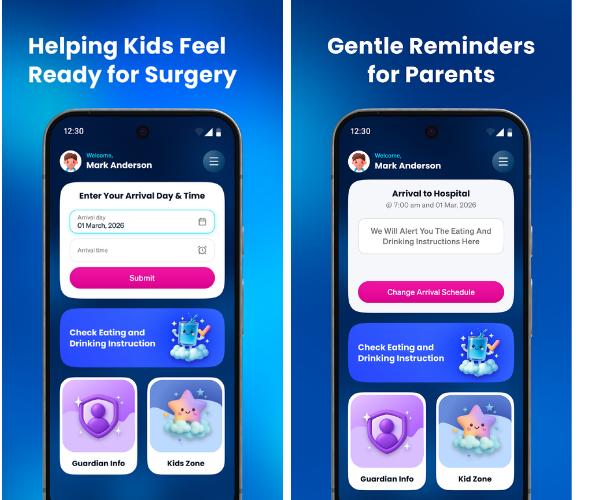
PreOpApp™ Kids is designed to help children and families better understand and prepare for surgery in a way that feels interactive, engaging, and less intimidating. The app includes age-appropriate educational content, interactive games focused on calming and breathing techniques, preparation guidance for families, perioperative fasting reminders, and storytelling experiences that help familiarize children with what they may see and experience on the day of surgery.
One of the major goals was to make preparation feel less overwhelming and more empowering for children. In pediatric anesthesia, we often see that fear comes from uncertainty and lack of familiarity, so the app focuses heavily on modeling, exposure, and emotional preparation in a child-friendly way. I do think many children today respond naturally to digital platforms because technology is already part of how they learn, communicate, and explore the world. A phone or tablet screen is already a familiar and comfortable space for many children, which makes it a powerful way to reach them when they are entering an unfamiliar and potentially frightening hospital or operating room environment.
There have been efforts to bring virtual experiences into perioperative care, including through large headsets, but those tools can be expensive and difficult to scale, especially in many areas of the world. And practically speaking, many children who are already anxious in a new medical environment may not want more equipment around their head, face, or personal space. I wanted PreOpApp™ Kids to be something simple, accessible, and scalable — a tool that can meet children where they already are, while supporting the preparation, communication, and reassurance provided by families and clinical teams.
Can you tell us about a time when having access to an app like yours would have greatly helped a particular child you treated in the past?
I do believe that having the NPO alert reminders in PreOpApp™ Kids would help so many of my patients! However, one child in particular was a 6-year-old boy having orthopedic surgery last summer, before the app was in production and before the Little Hottie™ breathing game was ready for use. When we brought him into the operating room each time I gently placed the anesthesia mask over his nose and mouth, he held his breath. At first, I was trying to understand what was happening, so I talked with him and spent some time figuring out what was going on.
What I realized was that he was not really familiar with consciously controlling his breathing. It seemed like the idea that he could intentionally take slow, deep breaths was new to him — and now he was being asked to do that while also processing a mask, an operating room, new people, and a scary medical environment. It was just too much all at once.
For a child like him, that could have transformed the mask from something unfamiliar and overwhelming into part of a game he understood. It would have engaged him, distracted him, and made him feel more comfortable, while also encouraging the exact breathing pattern we were trying to help him achieve.
A lot of studies measure pediatric anxiety at the time a child enters the operating room or when the mask is introduced. Those are important moments, but they do not fully capture something I think is clinically meaningful: a child’s willingness to participate in their own inhalation induction of anesthesia. For many children, that participation can change the entire emotional tone of the experience. My hope is that tools like this can help children feel more engaged, less overwhelmed, and more comfortable taking part in the process.
You've also been very active in mentoring anesthesiology trainees in the U.S. and abroad and have participated in multiple medical missions internationally. What have you learned from those trips, and how do you see that kind of work intersect with your focus on patient experience at home?
I have been incredibly fortunate to take care of children and work with trainees in many different countries and clinical environments. Those experiences have shaped me deeply. I am currently enjoying my time helping to lead the SPA Global Mentorship Subcommittee.
All of these experiences have shaped me deeply. One of the biggest things I have learned is that the emotional needs of children and families are universal, even when the resources, systems, languages, and cultural expectations are very different.
In every setting, families want to understand what is happening to their child. They want to feel that their child is safe, that someone is communicating with them, and that their child’s fear matters. That is true whether I am taking care of a child in a large children’s hospital in the United States or in a much more resource-limited environment abroad. (And this is important to model for trainees, no matter the location.)
Those trips have also taught me the importance of simple, scalable solutions. In some places, there may not be access to expensive technology, child life specialists, or extensive preoperative programs. But preparation, communication, reassurance, and trust still matter tremendously. That has really influenced how I think about patient experience at home as well. We should not assume that better preparation always has to be complicated or expensive.
For me, global health work and patient experience are very connected. Working internationally has reinforced that children everywhere deserve to feel less afraid and more supported when they come for surgery. It has also pushed me to think about how tools like PreOpApp™ Kids can be accessible across different settings, not just in well-resourced hospitals. The goal is the same everywhere: to help children and families feel more prepared, more informed, and less alone during a stressful medical experience.
What about hobbies? How do YOU relax and find your emotional center in potentially stressful situations?
I think this is something I am still learning and working on, especially while balancing clinical work, children, family life, co-editing Rapid Review Anesthesiology Oral Boards, 2nd Edition, and building something new. But when I do have time to reset, I really value being outdoors, spending time with family and friends, traveling, and finding moments that feel grounding and creative. I also love sleep (!), and working out is a huge stress reliever for me.
I also think music, art, and storytelling have always been important ways for me to reconnect emotionally — and right now, with a 4-year-old and a 6-year-old, I do a lot of those things already! Those interests actually show up in PreOpApp™ Kids, especially in the storytelling, calming sounds, and visual elements designed for children. I find a lot of meaning in creating things that feel beautiful, comforting, and useful.
In stressful clinical situations, I try to center myself by slowing down, focusing on the child and family in front of me, and remembering that calm communication can change the emotional tone of the room. As anesthesiologists, we are often meeting families at a moment when they feel very vulnerable. I try to be very intentional about my presence, my voice, and the way I explain what is happening.
For me, emotional center comes from purpose. When I feel connected to why I am doing the work — helping a child feel safe, helping a parent feel reassured, or helping a team move through a stressful moment calmly — that helps me stay grounded. I find a deep happiness in helping others.
Is there anything else you'd like to discuss that we haven't yet touched on?
One thing I would add is that I see this work as part of a larger effort to improve how we prepare children and families for surgery. Pediatric perioperative anxiety is not just a small emotional detail — it can affect the child’s experience, their clinical outcome, the family’s experience, and the way the entire perioperative day unfolds.
I think there is a real opportunity to make preparation more consistent, accessible, and child-centered. Not every child has access to the same resources before surgery, and not every hospital has the same ability to provide extensive preoperative preparation. My hope is that tools like PreOpApp™ Kids can help close some of those gaps by giving families something supportive and easy to use before they arrive and during the perioperative experience itself.
I also think this is an exciting time to think differently about pediatric anesthesia, including how we prepare children and how we approach inhalation induction. In many ways, we have done inhalation induction basically the same way for nearly 200 years. It is time for something new. We have an opportunity to combine clinical expertise, technology, creativity, and emotional support in a way that truly meets children where they are.
For me, that is really the heart of this work: helping children feel less afraid, helping families feel more prepared, and making the experience of surgery a little less overwhelming for everyone involved.
Dr. Lauren Welsh is a pediatric anesthesiologist based in Evans, Georgia. Her clinical work focuses on both medical excellence and the emotional experience of children and families during the perioperative period. In addition to clinical practice, she is deeply committed to education, mentorship, and global health. She is the Founder and Chair of the Pediatric Preoperative Management Special Interest Group within the Society for Pediatric Anesthesia.
#MemberSpotlight
#PatientExperience
#PediatricAnesthesia